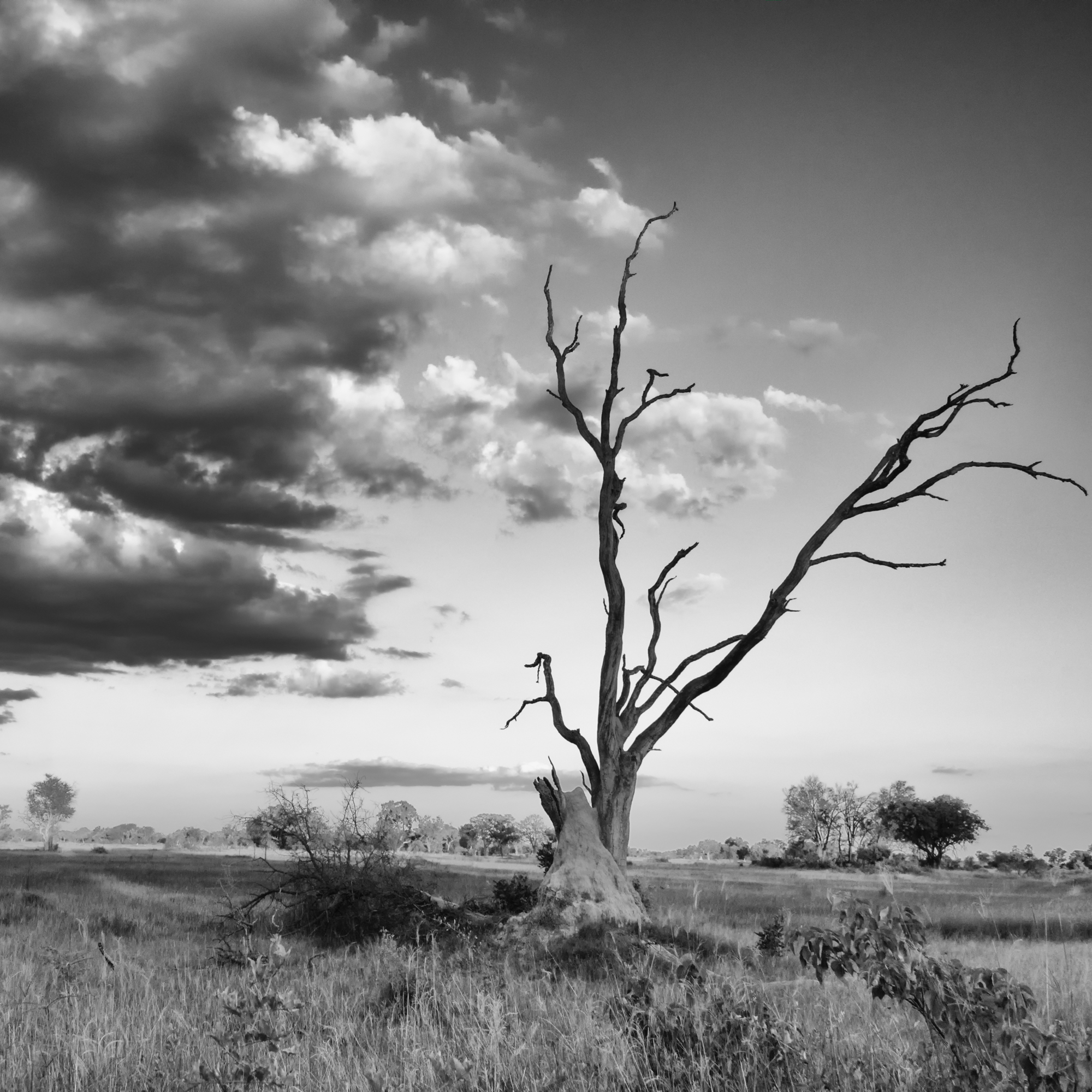
It seems a little bit strange creating a blog post that doesn’t actually show you what a red-billed quelea looks like up close. I don’t think on any of my trips to southern Africa I have managed to get that type of shot. What I wanted to share with you today was some shots of the stunning murmurations that the quelea display.
These little birds are the most abundant bird species on earth, and many farmers consider them a pest, given the way they can strip a cultivated field in the blink of an eye. I can understand the devastation that they cause when they end up in cultivated areas on mass, but watching them out in the bush against a colourful sunset is an absolute sight to behold (and definitely one worth putting down the sundowner glass of wine, and picking up the camera).
My only regret is I didn’t switch into video mode at any of these sightings; I’ll put that on my to-do list for the next time. 🙂
I hope you enjoy these images, and wishing you a fantastic week ahead.
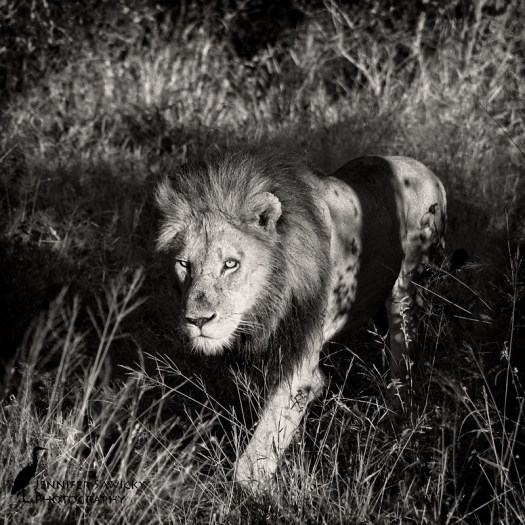
Happy Monday! I hope everyone had a relaxing weekend, and is ready for the week ahead. I found a lion image from a previous trip that had been edited but never shared, so I found a couple of others to put together this grouping.
I hope you enjoy, and wishing you a fantastic week!
This image was from 2017, when we had prolific lion sightings and had the pleasure of listening to their roars cutting through the night. On this past trip, I didn’t hear a single lion roar, but the lion dynamics can change significantly on properties over a few years.This young male was seen in the late afternoon lounging next to a waterhole at Kings Camp in the Timbavati. Doesn’t he look majestic? You can find this image, along with lots of others, over in my gallery.This lion and his brother were moving at speed through the property that Chitwa Chitwa has traversing rights to. We were fortunate to have an opportunity to view them before they crossed the boundary, and could no longer be followed by our vehicle.
Instead of my weekly monochrome Monday post, I decided to share some of my favourite elephant images, in honour of World Elephant Day.
May these beautiful animals roam in peace 🙂
My favourite baby elephant, testing to see if sand is good eating. 1/640sec, f9.0, ISO 2000
A pair of elephants moving down a road.
Elephants marching one by one.
Elephants galore in this multiple exposure image.
An adorable baby elephant trying to make itself look big and threatening.
A herd of elephants in Amboseli.
Elephants are my favourite animal to spend time with on safari, so feel free to search my site for elephants to find other posts about these majestic giants, or take a look at the gallery.
Last week, I featured hornbills for my topic of the month, and this week, it is birds in the dark. I had started typing out birds at night, but one of the images was taken at daybreak, and I thought it best to try and be accurate 🙂
I was very fortunate to have several different owl sightings during my travels, as well as two nightjar sightings. The nightjars were by far the easiest to photograph, as they tend to lay in the road after dark, and if you are lucky you can drive the vehicle fairly close to them and use a spotlight. Owls are a more challenging one, unless you are lucky enough to find them very close to the road, and not spook them when driving up.
This past trip, the first owl sighting I had was on my first evening game drive, and it was rather exciting. I spotted this owl far away on a tree, and as we watched for a few moments, we realized it had a kill it was working on. The terrain made it impossible to drive any closer, so I had to do the best I could with a 400mm lens and a bit of cropping; the quality isn’t fantastic, but the moment was definitely memorable.
A Verreaux’s eagle-owl on a scrub hare kill. Lion Sands River Lodge, May, 2019
I had one eagle sighting while in the Timbavati, of a pearl-spotted owlet, but unfortunately by the time I got the attention of our ranger to stop, the owl was in flight and all I got was a butt shot as it flew away. And not even a decent butt shot; it’s completely blurry and not worth sharing. There’s always next time though 🙂
The rest of the sightings of birds in the dark all came while staying at Chitwa Chitwa with Harley as our guide. Harley really seemed to enjoy pointing out birds, and identifying the ones that I would randomly point at (generally small raptors which I still have a terrible time identifying).
The southern white-faced owl and the spotted eagle owl were seen within about 10 minutes of each other while heading back to camp for dinner; and then the pair of Verreaux’s eagle owls were spotted the following morning as we set off from camp.
A southern white-faced owl. I’ve been lucky enough to see this species a couple of times before. Chitwa Chitwa, South Africa. May, 2019.
Nightjar’s are a common bird to see on game drives at night, but a lot of times they fly away before you have a chance to capture a picture. This past trip, I was fortunate to have two sightings of different species that I could get decent images of.
A fiery-necked nightjar. I would have struggled to identify this on my bird app if the song hadn’t been described as “Good lord, deliver us” which was the description our ranger Harley used when talking about them. Chitwa Chitwa, May, 2019.A rufous-cheeked nightjar. Very similar to the fiery-necked nightjar from beak to wing, but this one has white patches on the end two tail feathers (thank you, Roberts Bird app!)A spotted eagle-owl.A group of Verreaux’s eagle-owls, spotted early morning on a drive at Chitwa Chitwa. There were actually 3 in this group, but I couldn’t fit them all into one frame as one was in another tree, hidden behind the trunk until it took off.
I hope you enjoy my selections for the week. Wishing everyone a fantastic week ahead!
This week I decided to work on some cheetah images for monochrome Monday. I only had one cheetah sighting on my last trip, but as we had the opportunity to watch the female cheetah stationary under a tree, and in the beginning stages of a failed hunt, there were lots of opportunities for images. I’m still waiting for the magic moment of seeing a cheetah moving at something faster than a saunter; but that’s just another reason to go on safari again someday!
I hope you enjoy my selections for the week. Happy Monday, and wishing you a wonderful week ahead!
Cheetahs are such slender animals, that when they lay on their sides with their heads on the ground, you can barely see them. I think we might have driven past this female if she hadn’t lifted her head at an opportune moment.A stretch and a yawn, then she moved about 5 feet before laying down again. Disappearing into the tall grass at the start of a failed hunting expedition. The herd of impala spotted her as she moved through a clearing, ruining any element of surprise. Here though, you can start to see how these animals become invisible in their environment. If she had been slinking along through the grass in a more crouched position, she would have been invisible to any impala that glanced in her direction.
As mentioned last week, I am going to focus on birds for my Sunday posts during the month of August. I had some really interesting bird sightings during my recent travels, and I am looking forward to editing and sharing some of the moments.
I decided to start off with hornbills; the only reason being that a hornbill was the first bird image I took when I got to the bush, so it seemed a logical enough place to start. I posted a few hornbill images back in June as a wordless Wednesday post; you can find those here.
During my travels, I saw 5 different species of hornbill, including several sightings on two different properties of the endangered southern ground hornbill. Our rangers shared some fascinating information about these birds; the southern ground hornbill has helpers to raise their chick; these baby-sitters put in several years of assistance duties before they take on the responsibility of mating themselves.
A family group of 3 southern ground hornbills foraging in the early morning near Lion Sands River Lodge. South Africa, May 2019.This hornbill was also in a group of 3, seen while staying at Kings Camp in the Timbavati. The group were spread over over several different trees and fallen branches. May, 2019.
More common to see while out on game drives and the red and yellow billed hornbills (or banana head and chill pepper as they seem to be called quite often :)) Our rangers also explained some interesting facts about the breeding habits of the hornbills; I am not 100% certain if this applies to all the African hornbill species, but during breeding, the female will lay eggs into a tree hollow, and then allow herself to be sealed up inside the tree cavity with only a small opening to allow the male to pass food in to her and the chicks once they hatch. The female removes all her flight feathers during this time and allows them to regrow while nesting, and as such she is completely reliant on her mate for her survival, as well as the survival of their offspring. Such trust!
A red-billed hornbill showing off some serious flexibility. I’m pretty sure there are yoga poses that look like this 🙂A yellow-billed hornbill perched against the clear blue sky.A pair of red-billed hornbills spotted at sunset.
These last two hornbills are less common (at least for me) to see while out in the bush. I’ve seen the grey hornbill and crowned hornbill each on only one other occasion. Both of these were spotted while out on game drives from Lion Sands River Lodge.
A grey hornbill perched in the tree tops. Lion Sands River Lodge, May 2019.A crowned hornbill giving us a backwards glance.
I’ve had the amazing good fortune to see wild dogs on all of my trips to Southern Africa. I don’t think I could ever tire of spending time with these amazing animals; seeing the interaction between different members of the pack is always an interesting experience. On this past trip, I had two different sightings; one where the dogs were active and out in the open, and the other, where they were lazing away the morning deep in a thicket.
Here a few of my images from these two sightings.
Enjoy!
Alert and at the ready. Lion Sands River Lodge, May 2019.Always a good idea to check on who, or what, might be sneaking up on you from behind.Two of the pack members greeting each other; the behaviour of our pet dogs at the dog park is so similar.Taking the path of least resistance; a pair of dogs set off down the road.A pack of wild dogs resting deep in a thicket at mid morning. This group was seen in the Timbavati, whilst staying at Kings Camp.
I saved my favourite for last for my final instalment of July’s topic – Babies in the bush. I was actually so spoiled for choice with images of baby elephants that it was difficult to select which images to share. I’m not complaining, it is definitely a good problem to have!
On all of the properties we visited, the elephant sightings were prolific; so much so that a couple of our guides even commented about the volume of elephants sightings that we were having, and how lucky we were. There were moments that no matter which direction you looked, you were surrounded by elephants. And when we carried on down a road to see what else we could see, around every bend in the road, there were more. Being in the presence of these magnificent animals brings me such a feeling of peace and joy, so you’ll never hear me complain about seeing too many elephants while out on safari.
You can’t help but smile while watching baby elephants. They have so much personality, and are often very precocious and curious. You’ll often see them mock charging vehicles trying to be big and tough, playing with sticks and branches in the bush, tussling with their little friends, having a temper tantrum when something isn’t going their way, or playing shy, hiding between Mom and other larger, more confident elephants.
I hope you enjoy my selections for the week 🙂
A bit of follow the leader down on of the roads through the bush.If this little face doesn’t make you smile, I don’t think we could be friends 🙂Pausing for a quick drink of milk in the middle of the road.Some images just beg to be edited in a different way. For this one, instead of trying to enhance the sharpness, I went the other direction, and worked to highlight the dust, haze and softness of the image. This is one of my favourite images that I have worked on in the last couple of weeks, and I think I’m going to have to find some wall space and have this one printed. You can find this image on my gallery page.A herd of elephants digging in the dry riverbed for the water hidden underground. Look at the tiny baby tucked up against its Mom; still small enough to clear under her belly.There were several occasions on this trip where I ended up in the midst of enormous elephants herds; it didn’t matter which direction you looked, there would be many elephants to watch and take pictures of. Here is one of those moments with elephants as far as the eye could see, with lots of youngsters in the mix.A pair of youngsters playing while the rest of the herd grazed all around them.It’s a special treat to see elephants that are tiny enough to still be taking cover under their Mom’s tummy.